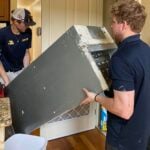
A tankless water heater heats water only when you need it. There is no big tank to keep hot all day, so you are not paying to heat water you never use. For many families, that means lower energy bills, more space, and a steady supply of hot water for back-to-back showers.
Alpine Climate Control has served homes in Sheridan, WY since 1985. We install, repair, and maintain tankless water heaters for families in Sheridan, Ranchester, Story, and Buffalo. We help you find out if tankless is a good fit, size it right for your home, and give you an upfront price before any work starts.
How a Tankless Water Heater Works
When you turn on a hot water tap, cold water flows into the unit. A gas burner or electric element heats the water as it passes through. When you turn off the tap, the unit shuts off. That is why tankless units are also called on-demand water heaters.
Because the unit only runs when water is moving, it does not lose heat the way a storage tank does. A tank heater keeps 40 to 80 gallons hot around the clock, even while you sleep or are away from home.
Benefits of Going Tankless
- Hot water that keeps coming. A properly sized unit keeps up as long as you need it, so the last person in the shower is not stuck with cold water.
- Lower energy use. You only heat the water you use, which can lower your monthly bills.
- More space. Most tankless units mount on a wall and take up a fraction of the room a tank needs.
- Longer life. With regular care, a tankless water heater often lasts longer than a traditional tank.
- No tank to burst. There is no large tank that can rust through and flood your basement or garage.
Is Tankless Right for Your Home?
Tankless is a great choice for many homes, but not every home. Northern Wyoming makes sizing extra important. The water coming into your home is cold for much of the year, so a tankless unit has to raise the temperature more than it would in a warmer place. A unit that is too small may not keep up when two showers and the dishwasher run at the same time.
We look at the size of your household, how many fixtures you use at once, and whether your home runs on gas or electric. Gas units often need a larger gas line and new venting. Electric units need a lot of power, and some homes cannot support them without upgrades. We explain all of this before you decide, so there are no surprises.
If a tankless unit is not the best fit, we will tell you. A high-efficiency tank may be a better choice, and our water heater installation and repair team can help with that too.